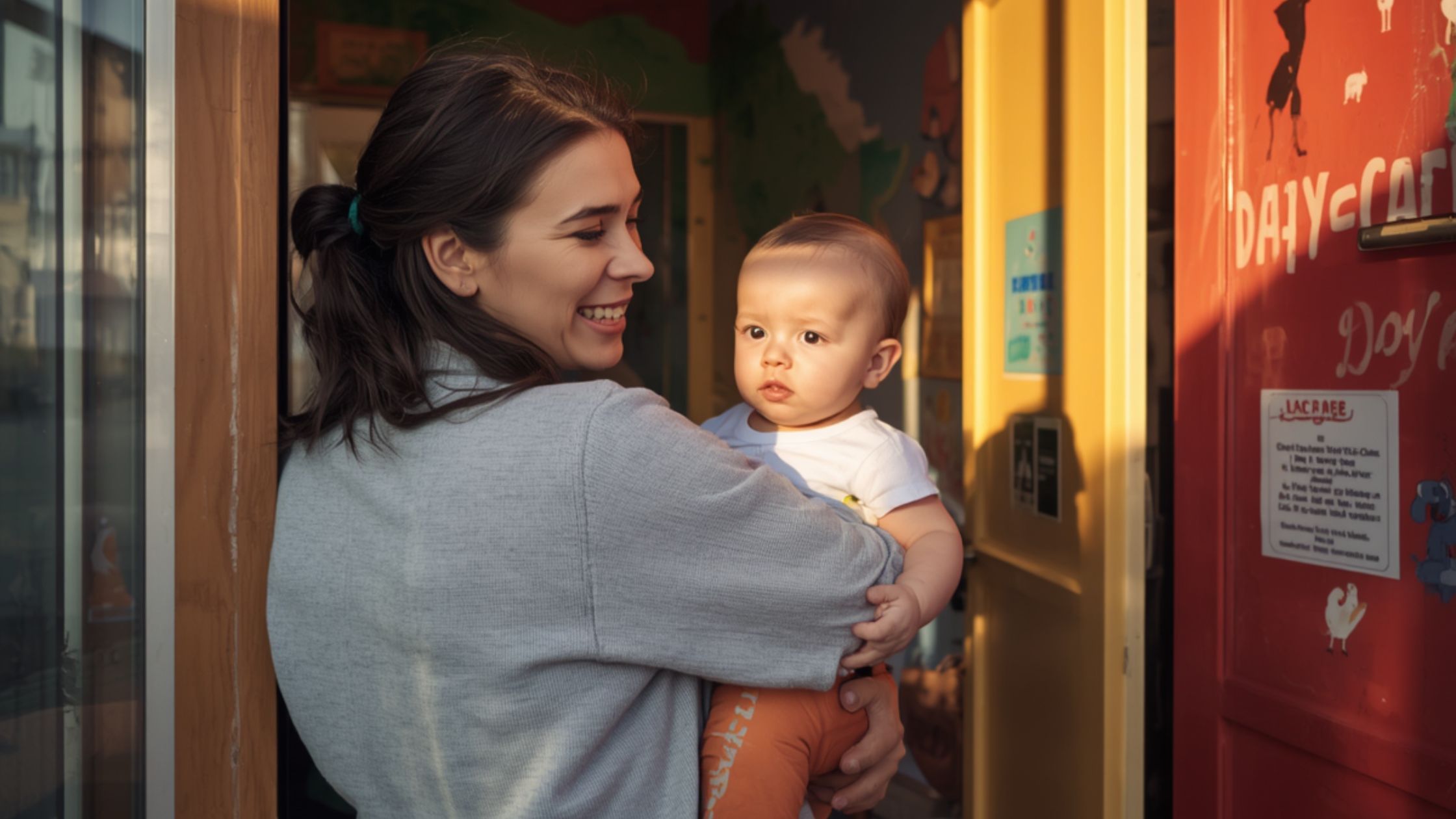
Drop-off tears, clingy legs, and morning tantrums can turn daycare drop-offs into an overwhelming ordeal for parents and toddlers alike. If your toddler cries when you leave, rest assured: separation anxiety is a completely normal developmental milestone.
Between 18 months and 3 years, children begin asserting independence while simultaneously fearing the loss of their primary comfort zone, which is you. Fortunately, with consistency and the right strategies, you can transform chaotic drop-offs into calm, confident goodbyes.
Understand the Roots of Separation Anxiety
When toddlers cry during drop-off, they aren’t manipulating you, they are processing genuine anxiety about being apart. Recognizing these feelings helps you respond with patience rather than frustration.
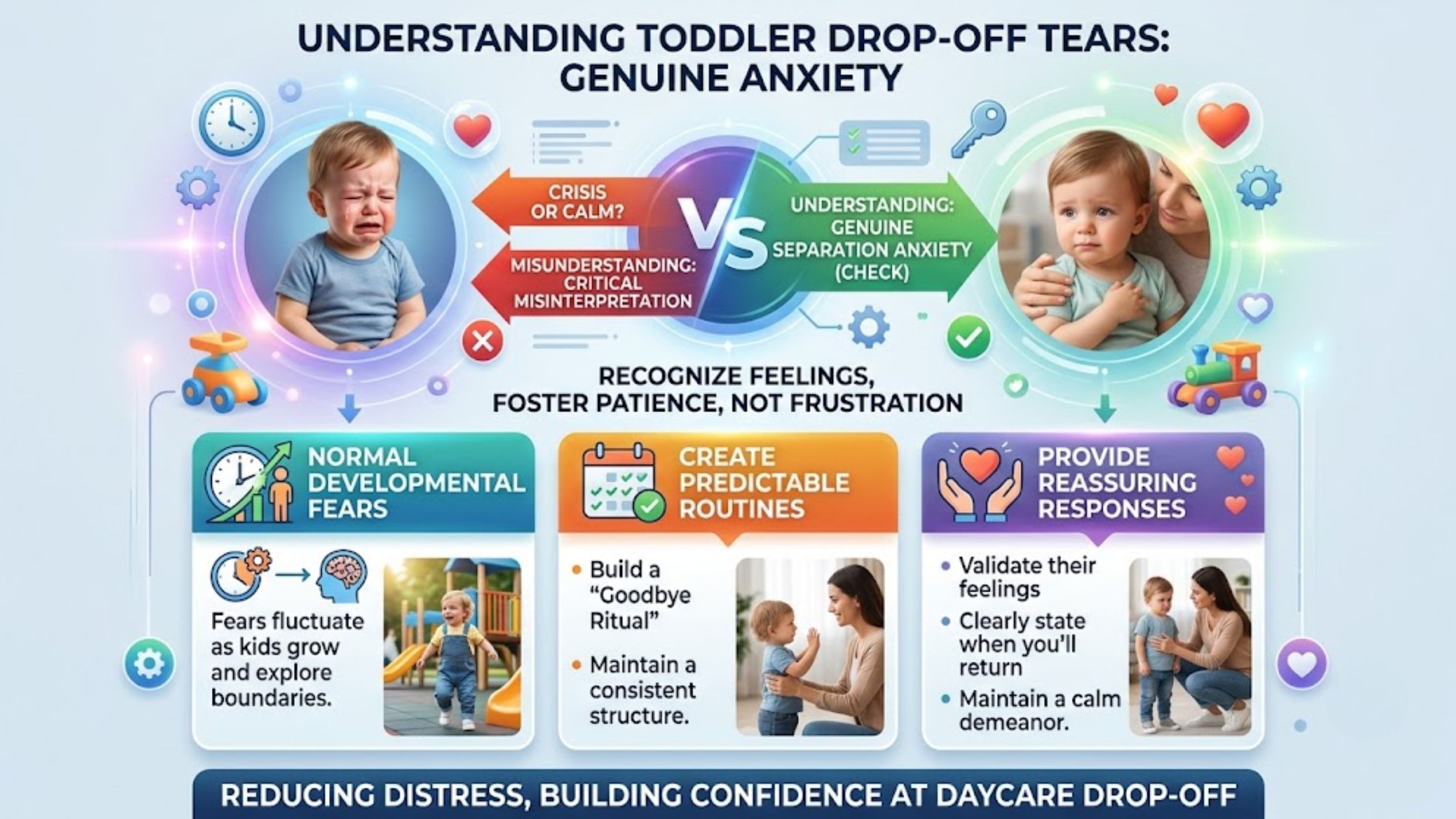
Child development experts emphasize that normal developmental fears and worries in toddlers fluctuate as kids grow and explore their boundaries. Clinical studies on understanding separation anxiety in young children show that predictable routines and reassuring caregiver responses significantly reduce distress levels over time.
Build a Quick, Predictable Goodbye Routine
Prolonging drop-off only increases your toddler’s distress. When parents linger, hesitate, or look anxious, children pick up on those emotional cues and assume the environment is unsafe.
Instead, create a simple, repeatable goodbye ritual:
-
Give a big hug, a high-five, or a special handshake.
-
State clearly when you will return using concrete time markers (e.g., “I’ll be back right after afternoon snack time!”).
-
Hand your child over to their teacher, say goodbye, and exit confidently—even if they cry.
Teachers are trained to redirect children immediately with engaging toys or group play. In most cases, tears stop within 60 seconds of a parent leaving the building.
Lean on Structured Classroom Frameworks
A predictable classroom structure gives toddlers a sense of control and safety. When children know what activity comes next, their anxiety drops significantly.
Top-tier early learning centers align their daily routines with state benchmarks, such as Ohio’s early learning and development standards, which focus on building social-emotional readiness. Additionally, center staff should follow state-mandated appropriate behavioral guidance policies in Ohio to ensure every child feels respected and supported.
Partner with Experienced Educators
A warm classroom community makes all the difference in helping toddlers adjust to spending time away from home.
Our supportive toddler daycare program focuses on sensory play, social interaction, and emotional regulation to help little ones feel secure. As children master these routines, they transition effortlessly into our preschool learning environments.
For older siblings, we offer engaging school-age after-school care, and for children with diverse developmental needs, our specialized inclusive early education program ensures every child receives the tailored support required to thrive.
Commonly Asked Questions about Dropping off Infants at Daycare:
- Q: Is my toddler crying at drop-off to manipulate me into staying?
- A: No. Between 18 months and 3 years old, crying during drop-off is a natural reaction to processing genuine separation anxiety—not intentional manipulation. Toddlers are testing their independence while navigating a fear of being away from their primary comfort zone. Responding with patience and calm reassurance helps them feel safe.
- Q: How long do drop-off tears usually last after I leave the building?
- A: In most cases, tears stop within 60 seconds after you step out of sight. Experienced teachers are skilled at immediately redirecting your child’s attention toward engaging toys, sensory stations, or peer activities to help them settle in quickly.
- Q: Should I stay a few extra minutes to comfort my child if they start crying?
- A: Counterintuitively, lingering usually increases a toddler’s distress. When parents hesitate, look anxious, or double back, children often pick up on that emotional uncertainty and assume the classroom environment is unsafe. The best approach is a loving, firm, and quick goodbye ritual followed by a confident exit.
- Q: How can I tell my toddler when I’ll be back if they can’t tell time yet?
- A: Avoid using clock times like “5:00 PM,” which mean nothing to a toddler. Instead, use concrete event markers anchored to their daily routine—for example, “I will be back right after your afternoon snack!” or “See you right after outside playtime!”
- Q: How do structured classroom routines help reduce drop-off anxiety?
- A: Toddlers thrive on predictability because knowing what happens next gives them a sense of control and security. Early learning environments that follow consistent daily schedules reduce the friction of transitions, helping children build emotional regulation and independence over time.