There’s nothing quite like hearing your baby laugh for the first time—that precious, involuntary chuckle that tells you your little one is discovering joy and humor. But if you’re a new parent wondering when this milestone happens, you might be surprised to learn that baby laughter develops in stages, and it’s actually more fascinating than you’d expect.
The First Smiles Come Before the Laughs
Before babies laugh, they smile, sometimes in their sleep! Around 2 to 3 weeks old, your newborn might flash what looks like a genuine smile, though honestly, at this age, it’s often just a reflex or gas-induced grimace! By 4 to 6 weeks, babies develop what’s called a “social smile,” which is an actual response to interaction – beyond just staring. This is when your baby consciously smiles back at you, and it’s a huge milestone that many parents celebrate.
Smiling is actually the precursor to laughter. Babies need to develop the facial muscles, coordination, and emotional understanding required for laughter, and smiling is the first step in that journey.
When Do Babies Actually Start Laughing?
Most babies laugh for the first time between 3 to 5 months of age. However, this doesn’t mean all babies follow the exact same timeline—some laugh earlier, while others take their sweet time. At this stage, baby laughter is usually triggered by physical sensations rather than humor. Gentle tickling, silly sounds, or fun faces are often the ticket to those first precious giggles.
At around 4 months, you might notice your baby chuckling or giggling, though it may sound quiet or tentative. By 6 months, many babies laugh much more openly and predictably. They’re starting to find cause-and-effect humor funny—playing peek-a-boo, for example, becomes absolutely hilarious to a six-month-old.
The 3 Developmental Stages of Baby Laughter
3-5 Months: Reflexive Giggles
Early baby laughter is primarily reflexive. Your baby laughs because something feels good—a tickle on their tummy, a raspberries on their neck, or a funny sound you make. They’re not yet understanding jokes or complex humor; they’re simply responding to pleasant physical sensations and novel stimuli.
6-8 Months: Social Humor Emerges
Around this age, babies begin to understand that their laughter is a form of communication. They laugh not just because something feels good, but because they recognize that it makes you laugh too. This is the beginning of true social humor. Games like peek-a-boo become endlessly entertaining because babies are starting to predict what comes next—and the anticipation is part of the fun.
9-12 Months: Intentional Silliness
By their first birthday, many babies are actively trying to be funny. You might catch your baby laughing at their own silly antics, deliberately doing something they know makes everyone laugh. This shows developing self-awareness and an understanding of social interaction. They’re starting to grasp the concept that funny equals connection.
What Triggers Baby Laughter?
Understanding what makes your baby laugh can help you encourage more of those delightful moments. Here’s what typically works:
- Physical Stimulation: Tickling, gentle bouncing, and playful physical interaction are almost guaranteed to get a laugh from younger babies. The surprise element and physical sensation combine to create hilarity.
- Silly Sounds and Funny Faces: Exaggerated facial expressions, clicking sounds with your tongue, or silly voices often work wonders. Babies are delighted by the unexpected and unusual sounds adults can make.
- Peek-a-Boo and Surprise Games: The predictability combined with the element of surprise makes these games irresistible to babies. They’re learning about object permanence while having fun.
- Unexpected Actions: As babies get older, doing something unexpected—like crawling in a funny way or making an unusual noise—can trigger laughter because babies are beginning to understand the normal order of things and find deviations amusing.
Is My Baby Developing Normally?
Not all babies laugh at the same time, and that’s perfectly normal. Some babies are simply more reserved or serious by temperament. However, if your baby isn’t smiling socially by 3 months or showing any signs of laughter by 6 months, it’s worth mentioning to your pediatrician. They can assess whether your baby’s development is on track and provide guidance.
Keep in mind that developmental milestones are ranges, not fixed deadlines. A baby who laughs at four months is developing wonderfully—as is one who waits until six months. Every baby is unique.
Encouraging Your Baby’s Laughter
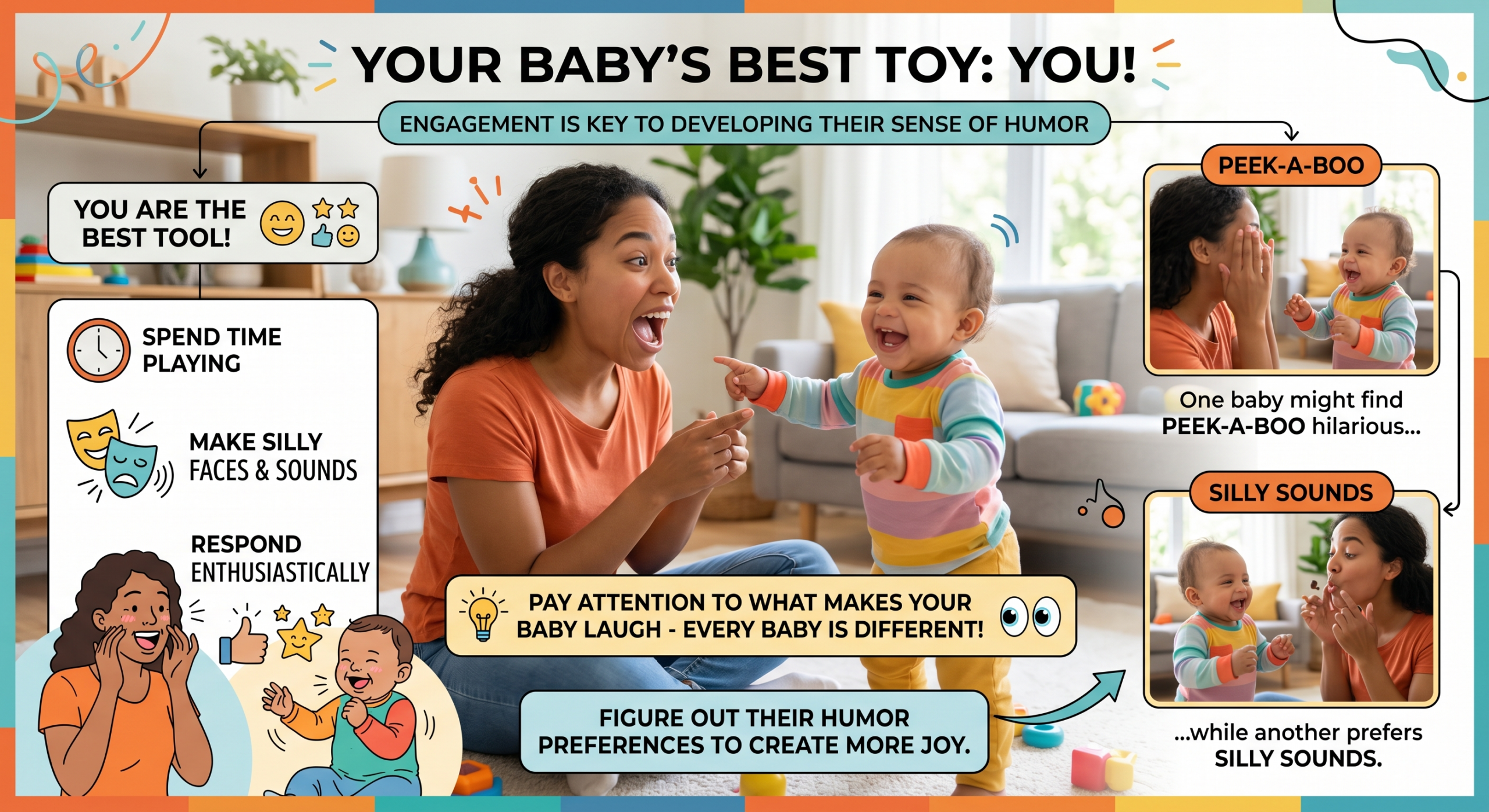
You don’t need fancy toys or complicated games to get your baby laughing. The best tool you have is yourself. Spend time playing with your baby, making silly faces, and responding enthusiastically to their attempts at humor. Babies learn through interaction, and your engagement is what helps them develop their sense of humor.
Some of the best laughter moments happen naturally when you’re simply being silly and responsive to your baby’s cues. Pay attention to what makes your specific baby laugh—every baby is different. One baby might find peek-a-boo hilarious while another prefers silly sounds. Once you figure out your baby’s humor preferences, you can create more opportunities for joy.
The Significance of Baby Laughter
Beyond the joy it brings you, baby laughter is actually incredibly important for development. When babies laugh, they’re engaging their lungs, exercising facial muscles, and building emotional connections with their caregivers. Laughter is also a sign of cognitive development—as babies grow, what makes them laugh becomes more sophisticated, reflecting their growing understanding of the world.
Waiting to hear your baby’s first laugh can feel like an eternity, but it’s just around the corner. By understanding when babies typically start laughing and what triggers those precious giggles, you can be prepared to celebrate this wonderful milestone. And once that laughter starts? You’ll find yourself doing silly things you never thought you’d do—all for the reward of hearing that beautiful sound.
So go ahead, make those ridiculous faces. Do that funny voice. Play peek-a-boo for the hundredth time. Your baby’s laughter is worth every bit of effort, and it’s one of the sweetest rewards of parenthood.