Leaving your infant in someone else’s care for the first time is one of the biggest emotional hurdles working parents face. Whether you are returning to work at 6 weeks or 6 months, finding an early learning environment where your baby feels safe, and where you feel confident, makes all the difference.
When evaluating potential childcare centers, look beyond colorful walls and cute décor. Focus on these critical elements to ensure your little one receives high-quality, nurturing care.
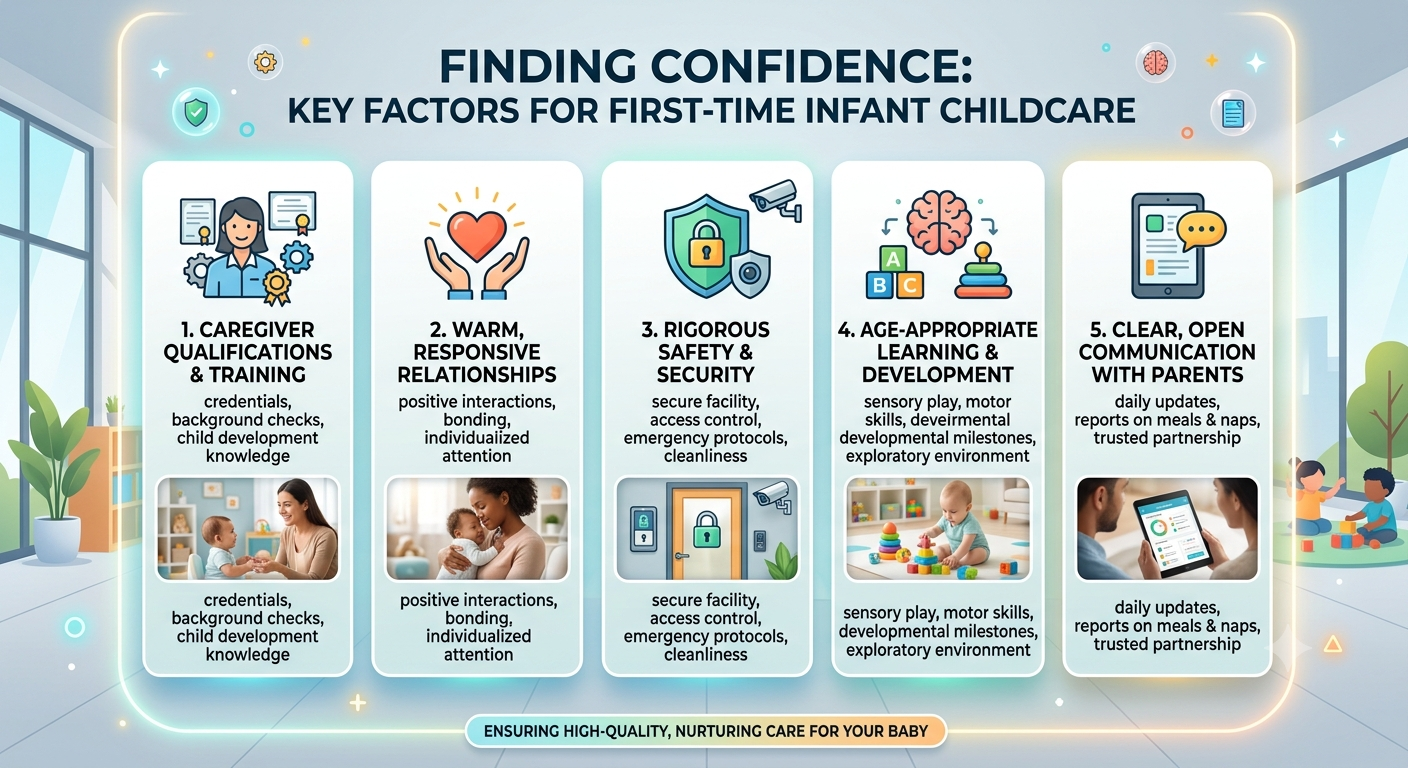
1. Rigorous Safety & Licensing Compliance
Your baby’s health and physical safety come first. A reputable child care center should maintain transparent safety standards, clean play spaces, and strict sanitation routines.
In Ohio, licensed centers must adhere to official guidelines governing caregiver qualifications, facility cleanliness, and infant supervision. Always verify that a facility adheres to Ohio infant safe sleep and health standards to reduce risks while your baby sleeps. Knowing the baseline licensed child care center requirements in Ohio gives you peace of mind that the program meets or exceeds state safety benchmarks.
2. Low Ratios and Responsive Caregiving
Infants do not learn through formal instruction—they learn through loving, responsive relationships. Look for low caregiver-to-infant ratios that allow teachers to respond quickly to cries, feeding cues, and cuddle requests.
Neuroscience shows that these frequent “serve and return” interactions build the foundation of a baby’s developing mind. As research highlights, responsive caregiving builds early brain architecture, shaping how children process emotions, language, and social bonds. Studies on family processes and early childhood development emphasize that secure early attachments foster emotional stability long into the future.
In our dedicated infant child care programs, trained teachers focus on gentle, individualized care that respects your baby’s unique sleep and feeding schedules. As your child grows, this nurturing foundation creates a smooth bridge into structured toddler care environments.
3. Sensory-Rich, Purposeful Play Spaces
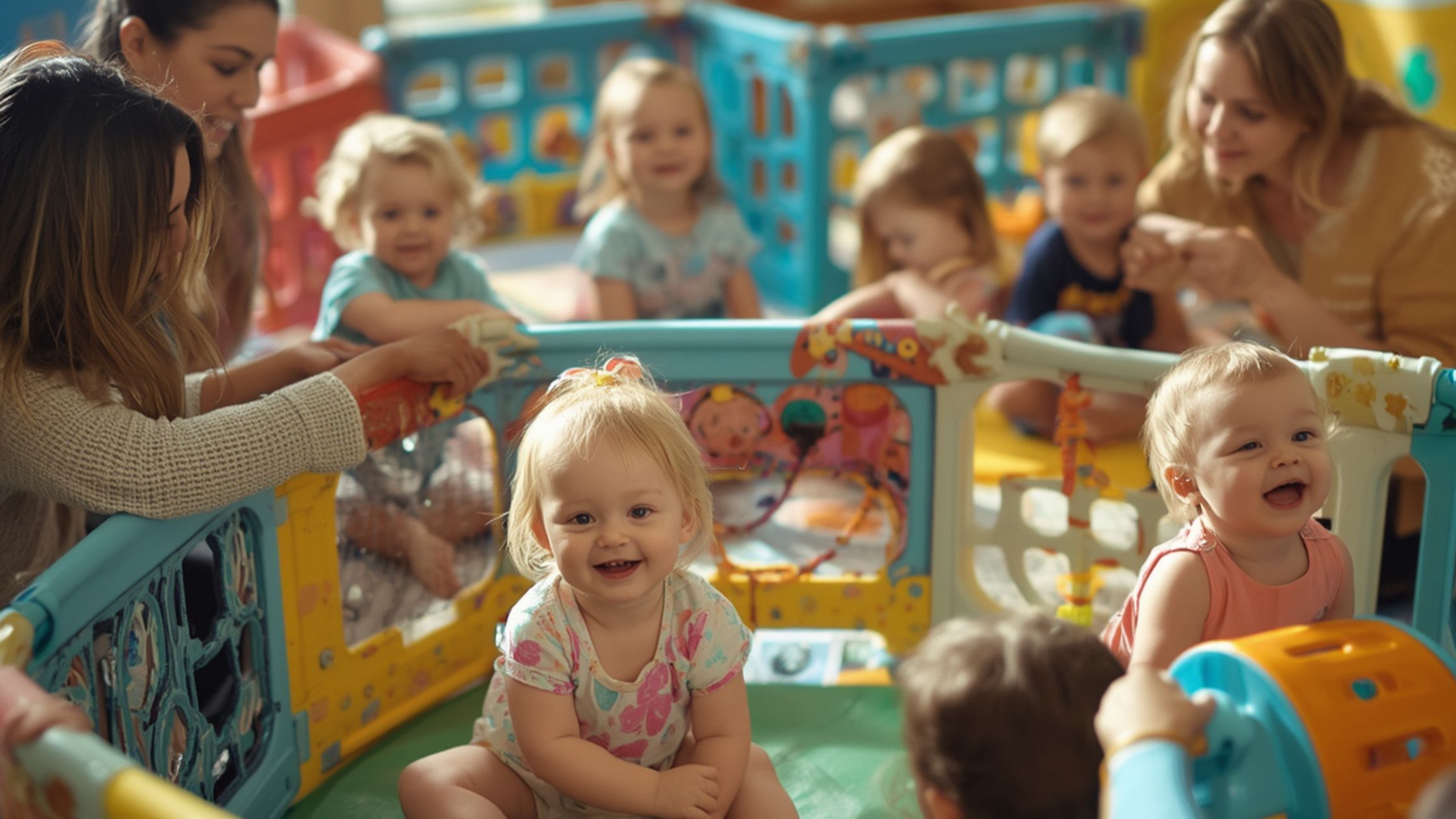
Infant classrooms should encourage safe exploration. Look for floor spaces equipped with soft climbing blocks, tummy-time mats, unbreakable mirrors, and sensory toys that encourage reaching, rolling, and sitting.
Ask prospective centers how they balance quiet rest with active sensory time. A well-designed classroom encourages natural curiosity while maintaining a peaceful atmosphere. To see how early learning fits into a continuous educational journey, explore how all of our early childhood programs integrate age-appropriate learning frameworks from infant stages through pre-K.
4. Transparent Parent Communication
You should never have to guess how your baby spent their day. Ask centers if they provide daily digital reports tracking bottle feedings, diaper changes, nap times, and developmental milestones.
Whether you visit our Columbus daycare center or any of our other regional academies, open daily communication helps parents stay connected to their baby’s progress every step of the way.
Commonly Asked Questions about First-Time Infant Care
- Q: How do I know if an infant care center in Ohio is legally licensed?
- You can verify a center’s licensing status directly through the Ohio Department of Job and Family Services (ODJFS) Child Care Licensing webpage. Reputable centers, like Clever Bee Academy, will also have their license clearly posted near the entrance of the facility for families to review.
- Q: What is the recommended caregiver-to-infant ratio for high-quality care?
- In Ohio, the mandated maximum ratio for infants (0–12 months) is 1 caregiver for every 5 infants, with a maximum group size of 10. However, high-quality programs often strive for even lower ratios. Low ratios are critical because they ensure your baby receives the immediate, responsive, “serve and return” interactions essential for early brain architecture and emotional security.
- Q: What do babies actually do all day in infant daycare? Is it just babysitting?
- High-quality infant care is far more than babysitting. A purposeful program focuses on developmental milestones through sensory-rich play. This includes supervised tummy time to build motor skills, story time for language exposure, sensory materials to explore textures, and gentle music/movement activities.
- Q: How will I know how much my baby ate, slept, or had diaper changes during the day?
- Transparent communication is a hallmark of a professional center. Many modern academies utilize secure digital reporting apps (like Brightwheel or Tadpoles). These apps provide real-time updates and a digital daily summary detailing exactly when your baby was fed (bottles/solids), when they napped, their diaper changes, and photos of them engaging in learning activities.
- Q: When is the best time to start touring infant care facilities?
- It is almost never too early to start looking! Many high-quality centers have waiting lists, especially for infant care (the most in-demand age group). We recommend starting your research and scheduling tours during your second trimester of pregnancy. This gives you ample time to evaluate options, ask questions, and secure a spot that fits your family’s timeline.