Starting kindergarten is a milestone for the whole family, and most parents wonder whether their child is truly prepared. Readiness is not about naming every letter or counting to 100 on the first day.
It is a blend of social, emotional, and academic skills that help a child settle into a classroom, follow a daily routine, and build confidence. In Ohio, teachers actually measure these areas during the first weeks of school through the state Kindergarten Readiness Assessment, which looks at language, math, motor development, and social foundations rather than a single pass-or-fail score.
Is Your Child Ready for Kindergarten? 7 Essential Social and Academic Skills
The encouraging news is that these skills grow naturally through play, conversation, and consistent early learning. A strong preschool program gives children daily practice with the exact habits kindergarten teachers hope to see. Below are seven skills that signal your child is ready, along with simple ways to strengthen each one at home.
7 Skills That Show Your Child Is Ready for Kindergarten
1. Following Directions and Listening
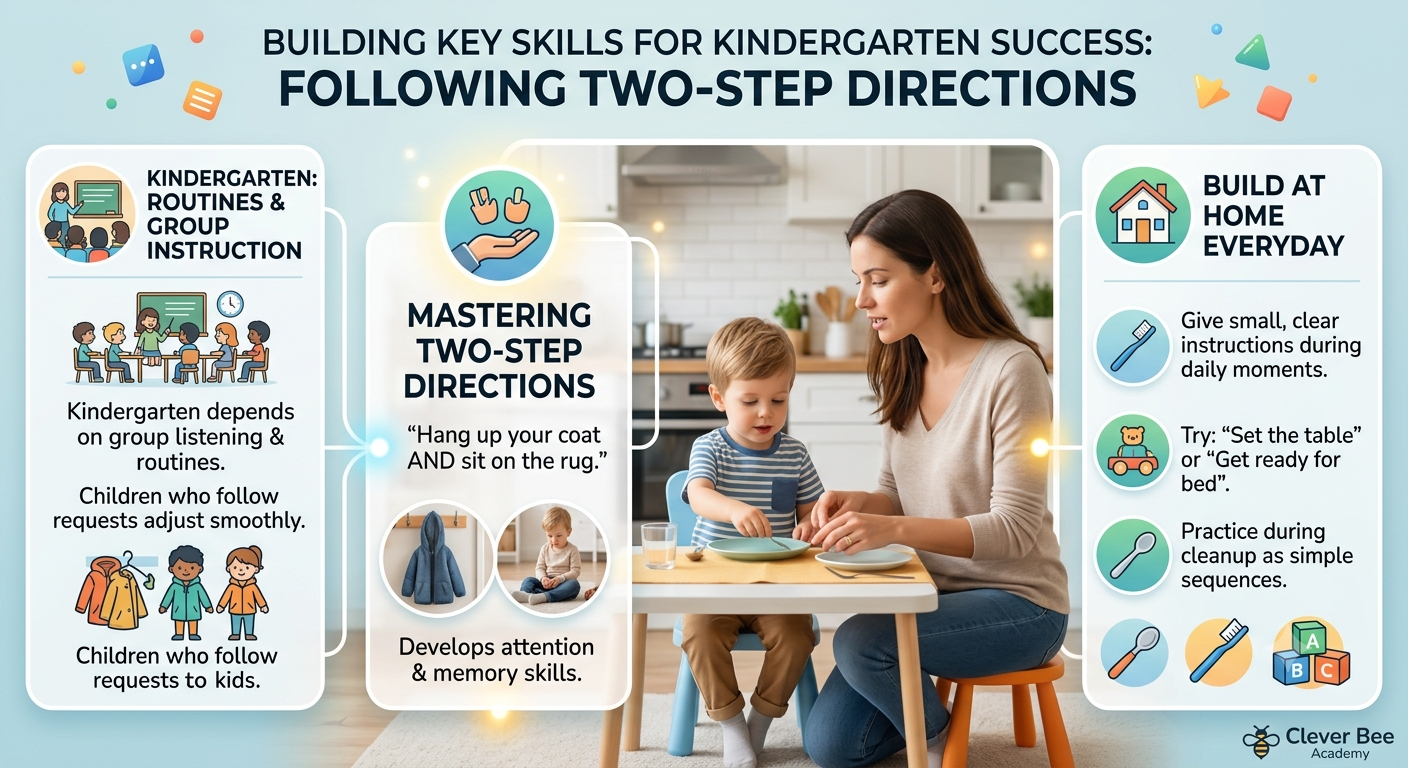
Kindergarten runs on routines and group instructions, so a child who can listen and act on a request will adjust more smoothly. Look for the ability to follow two-step directions, such as “please hang up your coat and sit on the rug.” You can build this skill at home by giving small, clear instructions during everyday moments like setting the table or getting ready for bed. Turning cleanup into a simple sequence of steps helps your child practice attention and memory at the same time.
2. Managing Emotions and Self-Regulation
Many kindergarten teachers say that social and emotional development predicts classroom success even more reliably than early academics. A ready child can handle small frustrations, wait for a turn, and recover from disappointment without falling apart. These are big tasks for a five-year-old, and they develop with patient coaching. Naming feelings out loud, modeling calm responses, and praising your child when they work through a hard moment all give them tools they will use every school day.
3. Getting Along With Others
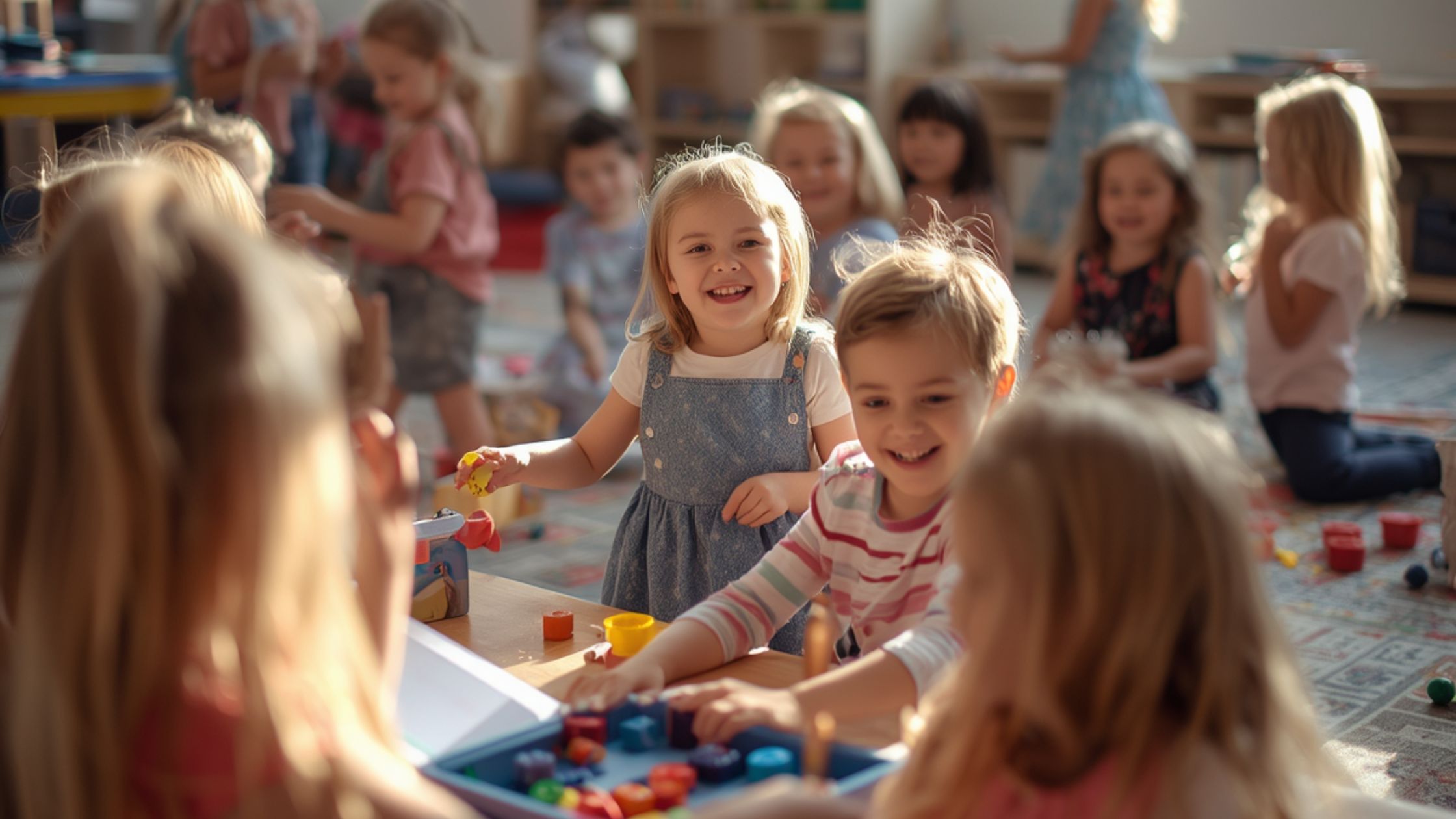
Sharing, taking turns, and cooperating in a group are daily expectations in kindergarten. Children who can join play, resolve small conflicts with words, and show empathy tend to form friendships quickly, which makes school feel safe and welcoming. Playdates, sibling time, and group activities give your child low-pressure chances to practice. Coaching gentle phrases like “can I have a turn?” gives them a script to lean on when they feel stuck.
4. Independence and Self-Help Skills
A kindergarten classroom asks children to manage themselves in ways preschool often did not. Being able to use the bathroom independently, wash hands, open a lunch container, zip a coat, and put away belongings frees your child to focus on learning instead of logistics. Let your child practice these tasks at home, even when it takes longer, so they arrive with the confidence that comes from doing things on their own.
5. Early Literacy and Language
Reading readiness begins long before a child sounds out words. It grows through rich language and literacy experiences at home: recognizing some letters, hearing rhymes, retelling a favorite story, and understanding that print carries meaning. The single most powerful habit is reading aloud every day, which builds vocabulary, listening skills, and a love of books. Point to words, ask what might happen next, and let your child fill in the endings of familiar stories.
6. Early Math Thinking
Math readiness is more about thinking than memorizing. Counting objects, sorting by color or size, recognizing shapes, and noticing simple patterns all lay the groundwork for kindergarten math. These ideas show up everywhere in daily life, from counting stairs to setting out one napkin per person. A well-designed early childhood curriculum, like the one built into Clever Bee Academy’s early learning programs, weaves this kind of hands-on math practice through play so children build number sense without pressure.
7. Fine Motor Skills
Small-muscle control supports much of the school day, from holding a pencil to using scissors and buttoning a shirt. Children who have practiced these movements can write their name, draw shapes, and manage classroom materials more comfortably. Playdough, lacing cards, drawing, and cutting activities all strengthen the tiny muscles in the hands. Short, frequent practice works better than long sessions, so a few minutes of coloring or building each day adds up.
How to Support the Transition for Your Child
No child masters every one of these skills before the first day, and that is expected. Readiness is a range, not a finish line. Ohio’s teachers use the Kindergarten Readiness Assessment as a starting point to understand each child, not as a gate that keeps anyone out. Your job at home is simply to give your child steady, encouraging practice with the habits above.
Talk warmly about school, keep consistent routines, and let your child take on age-appropriate responsibilities. If you want extra support, quality early education keeps that momentum going even after kindergarten begins. Programs such as before and after school care reinforce the same social and academic skills through the early elementary years, so the growth your child gains now continues to build. With loving preparation and a strong foundation, your child can walk into that first classroom ready, curious, and confident.
Frequently Asked Questions (FAQ) About Your Children’s Readiness for Kindergarten
Q: Does my child need to know how to read or count to 100 before starting kindergarten?
A: No. Kindergarten readiness is not about reading fluently or memorizing numbers on day one. It is a mix of social-emotional maturity and foundational academic concepts—such as recognizing a few letters, counting real objects, following simple instructions, and showing curiosity about books.
Q: What is the Ohio Kindergarten Readiness Assessment (KRA)? Is it a pass/fail test?
A: The KRA is an assessment tool administered by teachers during the first few weeks of school to evaluate language, math, motor development, and social foundations. It is not a pass-or-fail test and does not keep children out of school. Instead, it serves as a baseline to help teachers understand each student’s unique strengths and learning needs right from the start.
Q: What are the most important non-academic skills my child needs for kindergarten?
A: Teachers frequently emphasize self-regulation and self-help skills. Your child will benefit greatly from being able to manage frustration, take turns, follow two-step directions (“hang up your coat and sit on the rug”), use the bathroom independently, and manage personal items like zipping a jacket or opening lunch containers.
Q: How can I build fine motor skills at home without making it feel like schoolwork?
A: Keep practice short and play-based! Simple daily activities like squeezing playdough, using safety scissors, stringing beads or lacing cards, coloring, and building with small blocks all strengthen the tiny muscles in your child’s hands necessary for writing and holding a pencil.
Q: What if my child hasn’t mastered all 7 of these skills before the first day of school?
A: Don’t panic—readiness is a range, not a strict finish line. Children develop different skills at different paces. Consistent routines at home, coupled with quality early education or supportive before-and-after school care programs, will continue to build those social and academic habits alongside their kindergarten classroom experience.